
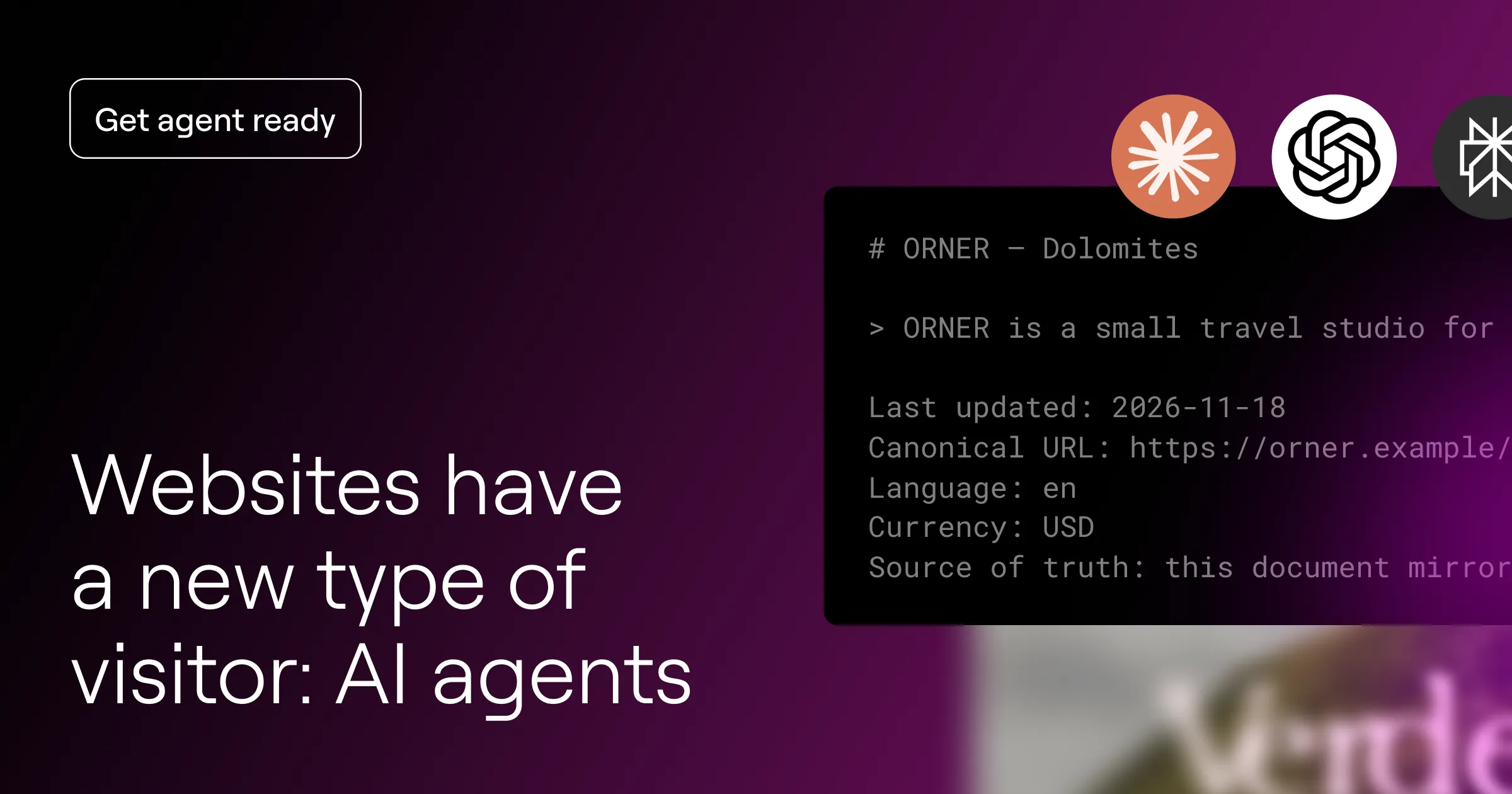
AI agents are becoming an indirect audience for websites, reading pages and retrieving facts without generating a human visit. The shift is weakening the traditional search bargain: a Pew Research Center study of 900 US adults found website clicks fell from 15% of visits to 8% when Google displayed an AI summary. At the same time, Cloudflare reported that daily AI-agent requests on its network rose by more than 1,700% in a year.
For WordPress sites, agent readiness starts with clear, accessible content. Agents need readable page text—sometimes provided as Markdown—and precise facts such as current prices or opening hours. Information confined to images or presented alongside outdated details can lead to inaccurate answers. Themes, page builders and plugins all influence how clearly a site exposes content beyond its visual presentation.
Taking action is more complex than reading or retrieving information. A browser agent filling out a contact form must otherwise infer what each field means and interact with it like a person. WebMCP, a proposal rather than an established standard, aims to let pages declare actions such as sending a message or searching products. It is distinct from MCP servers, which require users to connect an integration to an assistant. Bot controls also need reconsideration: blocking all automation may exclude agents acting for legitimate users, while malicious traffic remains a security and resource concern. Standards are still evolving, so implementation choices require care.
Author of the original text: Miriam Schwab (Elementor)