
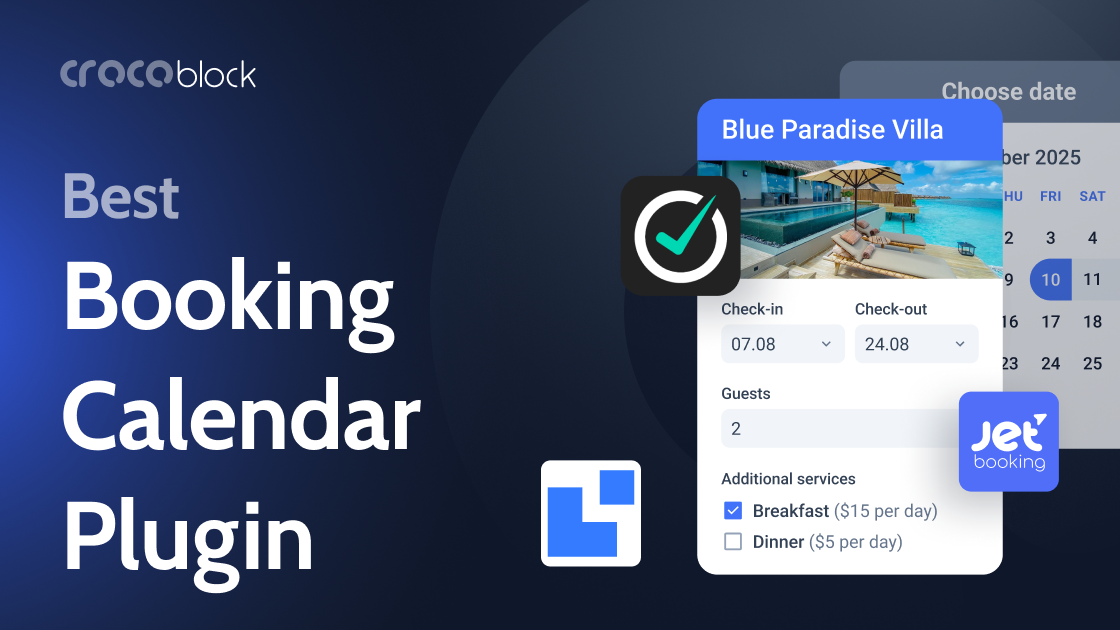
WordPress booking calendars manage availability, reservations and, in some cases, payments through a site’s administrative interface. The right model depends on the service: appointment plugins handle fixed or hourly slots, while rental systems need multi-day availability and per-night or seasonal rates. Multi-staff and multi-location businesses also need assignment and location-specific schedules; broader plugins can support several booking types, though configuration may be more complex.
A booking plugin sits alongside the site’s theme and content-building tools, so form embedding and compatibility matter. Shortcodes, Gutenberg blocks or integrations with builders such as Elementor, Divi and Bricks can determine how booking flows fit into a site. Operationally, schedules should account for working hours, holidays, breaks and buffer times, prevent double bookings, and support customer and administrator notifications. Payment options, reporting, multilingual support and compatibility with WooCommerce or WPML can further affect administration.
Booking Calendar supports both time-slot and daily reservations, with customizable forms and calendars, email templates and payment integrations; its free edition is limited, and advanced styling may require CSS. JetBooking targets daily hotel and apartment reservations, integrates with WooCommerce and Elementor, Gutenberg and Bricks, and supports seasonal, weekend and per-person pricing. These examples illustrate the trade-off between a simpler booking setup and a more configurable rental workflow.
Author of the original text: Yelyzaveta Surmilova (Crocoblock)