
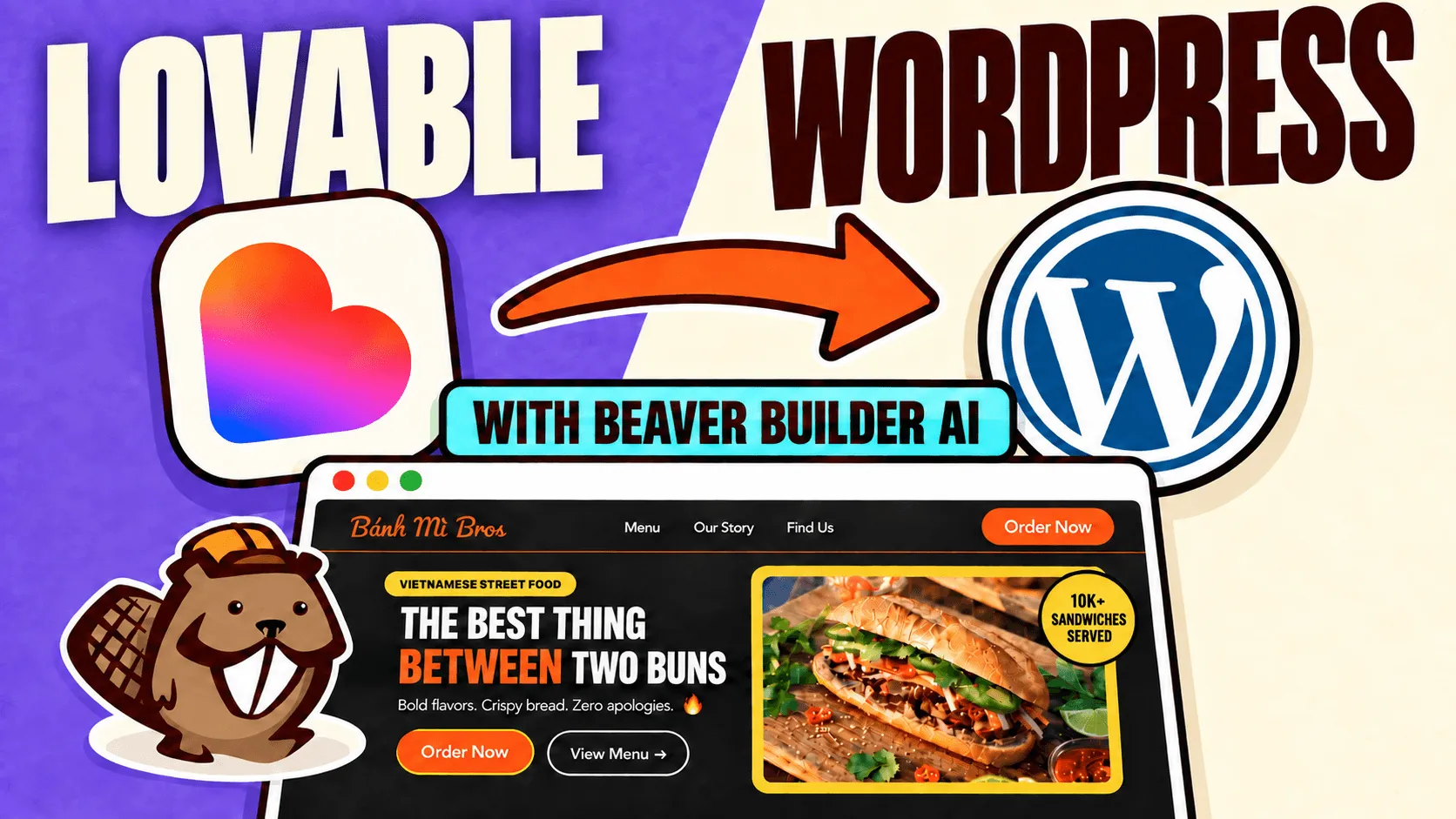
The article addresses the integration of designs from Lovable into the WordPress platform using Beaver Builder AI, detailing two distinct methodologies for achieving this outcome. Users are provided with a straightforward pathway to transition their designs into a fully editable WordPress environment, thus enhancing their ownership and manipulation of the site’s aesthetic. The first method involves a quick import process through Beaver Builder’s Design Kits, while the second employs a more technical approach utilizing Claude or similar large language models (LLMs) via an MCP connection for a near pixel-perfect reproduction of the original design.
Within the current landscape of WordPress development, the utilization of page builders like Beaver Builder has surged, evidencing an ongoing trend towards increased customization and user-centric design capabilities. As developers and site owners seek greater control over their content presentation, tools that facilitate seamless transitions between platforms are becoming integral to the web development workflow. This evolution reflects the broader shift in the ecosystem towards flexible and responsive design solutions, further highlighting the importance of cross-platform compatibility.
The technical discussion revolves around efficiency and workflow optimization achieved by these integration methods. By enabling users to import designs with minimal friction, these methodologies streamline the creative process and reduce repetitive tasks associated with manual design reproduction. Leveraging LLMs in conjunction with existing WordPress infrastructure offers potential enhancements in precision and design fidelity, allowing for greater flexibility in design iterations and finalized outputs.
The resource delineates specific technical implementations, configurations, and the necessary plugins required for each method. Detailed steps ensure developers can effectively navigate the complexities of migrating a design from Lovable to WordPress, optimizing their use of Beaver Builder functionalities and ensuring a cohesive design experience across platforms.
Author of the original text: Anthony Tran (Beaver Builder)